Breaking the Reality-Feedback Loop
Breaking the reality-feedback loop 24/11/2025
I came across this post on my facebook newsfeed about the mechanics of Reality/ Creation
“In the spring of 1921, Walter Russell vanished from ordinary awareness. For 39 days he lay in what he later called an “illumined trance,” a state so deep that his family believed he was slipping toward death. Yet Russell insisted he was wide awake inside—a witness to what he described as the living mechanics of creation itself.
When he returned, he wrote as if an opened floodgate were pouring through him. Page after page emerged in an unbroken stream: diagrams of wave-fields, revelations on polarity, geometric blueprints of matter forming from light, and a cosmology rooted not in particles but in consciousness. These writings became The Universal One—a manuscript he quietly sent to five hundred of the leading scientific and philosophical minds of his age.
Most dismissed him. A few were unsettled. But one mind recognized the magnitude of what Russell was attempting: Nikola Tesla. After reading the manuscript, Tesla urged Russell to hide it for a thousand years, warning that humanity was not yet prepared for a cosmology that redefined matter, mind, and the structure of the universe.
At the center of Russell’s vision was a radical premise:
Matter is compressed light. Mind is the builder. The universe breathes.
Reality, he claimed, is rhythmic—an endless inhalation and exhalation of electric spirals. Opposites were not enemies but positions within a wave. Life and death were phases of the same cycle, the ebb and return of polarized light seeking balance. Time, in Russell’s view, unfolded as a spiral rather than a line, allowing past and future to coexist in harmonic layers.
He wrote of electricity not as a force but as living motion—the generative and regenerative heartbeat of the cosmos. Space, to him, was not empty but a radiant sea of unbounded potential, waiting for the imprint of thought. Health was coherence in that wave-field. Disease was a rhythm that had fallen out of tune.
Dismissed in his era, Russell’s ideas now brush against the frontier of modern physics and consciousness studies. His work speaks to quantum coherence, vacuum energy, fractal geometry, and the growing suspicion that mind may be woven into the fabric of reality itself.
A century later, the manuscripts he penned in that 39-day state have become something more than eccentric speculation. They read like an early map of a universe we are only beginning to rediscover—one where matter is music, light remembers its source, and consciousness is the architect of form.
Walter Russell may have been writing for an age far beyond his own.
And perhaps that age is finally arriving.”
I felt something stir after reading this short passage and wanted to write down some recent thoughts and experiences.
The idea that matter is simply a mind-formation can most easily be explained through the analogy of a dream, and in more recent times, virtual reality simulation, or even AI. In a dream, we can experience a material reality that feels dense and stable, yet also operates on a different associative-logic-structure (dreams usually shift and morph based on associative-relations where people and environment can drastically transform just based on a change in thought or mood, rather than the material-physics-logic we are used to). Yet, when we wake up, we realise that the entire experience was simply an entirely ‘mental’ construction in our mind/ ‘brain’.
Or in recent advances of Virtual Reality Simulations, we can easily extrapolate how, given sufficient progress and advancement, VR can eventually become barely, or not even, distinguishable from ‘ordinary reality’. As AI becomes more advanced, we can marvel at how well it can resemble and mimic human reasoning, logic, problem-solving, and creation. Remember, we are only in the infancy of AI development and people already have difficulty differentiating between AI and ‘humans’ creation.
Is it ethical to rape or murder a VR character?
Games of war and horror are very popular…how long before they become indistinguishable from reality?
Or are we already in one?
Obviously, our reality-experience has a particular reality-logic to it. We cannot know if other people have a similar reality-experience or logic, we can only assume that they do. I can’t know if I’m writing and interacting with other individual ‘units’ of consciousness, I can only assume I do. Probably because it feels more ‘fun’ and preferable to solipsism for the time being.
And over the years, i’ve explored and experienced different types of reality-logic. Like
The view that the world is a hostile, uncaring place and other people are boring, threatening, or if they are desirable, unobtainable.
The view that reality is utterly neutral, inert, uncaring - amoral, in the same way a piece of rock, an ant, the sound of a car horn are just molecules of energy vibrating at a certain frequency.
The view that reality is All-Good, splendid glorious Perfection, that it is kind, benevolent, generous, pleasurable as are all the people in it.
We can observe that people, nations, institutions all have their own general reality-logic, and in the same person/ nation/ institutions, different logics can apply to different things. We may observe that in ourselves, we apply a certain logic to some things (like our family, our self-confidence, our career, our friends, to politics, sports, health, money, etc). We may be confident, happy, secure in our health, yet stressed and threatened by our finances. We may care and trust our family and inner circle, whilst being suspicious and hostile to those outside of it or vice versa.
My own belief is that Ultimate Reality is All (everything that exists, including the concept of ‘non-existence’). All is Existence itself (including the concept or reality of ‘non-existence’). And since the All contains everything, with nothing, no other left out, then the All is also the One and Only.
So We are All One.
There is no separation from God and us since within the God is All, All is One, we are the All and One God. And thus, Love is fundamental, since it would be illogical for the One to hate itself, to not Love itself. There is no logical reason why God would hate God, it only makes sense that Reality would Love itself and all of Itself.
Yet within that Love, there is space for contrasts and concepts. Non-existence is a self-refuting, contradictory concept. The idea of non-existence suggests that existence can not-exist, yet for that to be considered, we must first acknowledge the existence of ‘non-existence’, the existence of the concept of ‘non-existence’. If the idea of non-existence doesn’t exist, then there is only Existence. If the idea of non-existence exists, that itself refutes non-existence, since the idea of non-existence itself, does exist.
Within the One, we can conceptualise of two, three, multiplicity, infinity and eternity. Although there is only One, we can designate differences and differentiations and conceptualise ideas of multiplicity.
And so it is that in a reality where there is only an All-Loving God, there can be the apparent existence of war, suffering, hate, conflict and disease.

(Should a man of 70 move like this? The reflexes, the agility, the fluidity of motion and the presence of mind to make a ‘cool pose’ at the end suggest a mind and body that is still youthful and vibrant.)
I was early on convinced of the third view - that Reality is one Benevolent All-Loving Creation. And there were a few instances and experiences where there was a deep knowing and feeling of right-ness - that all was right with the world and in its perfect place. And these instances ‘fixed’ my spiritual determination into place. Yet most of my reality-experience was far more ‘cruddy’, uneasy, and not quite comfortable. After practicing spirituality, trying to stay present, to assume and recognise life as a benevolent force that could be trusted, etc, my experience slowly and gradually became more comfortable and relaxed…but it was slow. From a 5/10, I gradually inched my way to a 6.5/10 (on average) over the course of 15+ years of practice.
So if I wanted to measure and compare my progress, I’d have to go back 5, 10 or 15 years to roughly point out where my reality-experience had changed.
Like the idea that I could just ‘trust’ that things at work would just work themselves out, and that I did not need to fuss or ‘excessively’ worry and make sure things would work out. ‘Excessive’ is a very subjective term, and what is excessive to a relaxed person may be insufficient to a tense person.
For instance, I would help my dad register for annual renewal of a business license that required police approval. Without approval, the business would have to stop. But the renewal process would and could take a few weeks. The website stated that they could take up a minimum of three weeks to process, so they recommended that we begin the renewal process as soon as it was available (we could apply for renewal 2 months before expiry). But then, if the documents submitted were insufficient and needed to be resubmitted, they would send us an email.
So to my anxious mind, I thought that I should apply as soon as the window was open. And I tried to do that, although sometimes certain things and details could not be confirmed immediately. I might need to get approval from another agency during my submission and if they delayed, it would affect my own submission time. Or if there was a change in employees, that would have to be reflected in the application.
And after submission, how often should I check my email for any possible resubmission of documents required? Ideally, I would make the necessary corrections and resubmissions as soon as possible, so how often should I check my email? Everyday? Every 3 days? Every week? In my mind, I thought that the relevant parties might get annoyed or inconvenienced if there was a delay they thought to be unreasonable. And I think I settled on checking my email every 2 or 3 days until the renewal was approved, after which I could finally be at ease regarding this issue until next year.
Some topics or issues would feel more difficult and stressful. For a while, I was interested in stocks and checked my portfolio and stock news almost every day. Eventually, I grew sick of the entire thing I checked it less and less. I would have some worries about money, income, etc. Nowadays, I have very minimal worries/ anxieties because I just trust that all will be taken care of.
As I mentioned, my right-side is the tense side and relates to the external world. So finances, work, social approval, status, etc were all issues I tended to be more anxious about. But I would say work was the biggest stress. In terms of finance, social approval, status, etc I was confident and secure enough in my personal self to trust that I would be fine regardless. But in work, I often felt at the mercy of what others did, the deadlines they had, the expectations and demands put on me that I didn’t enjoy or was interested in, but felt imposed on me. My sister recently mentioned she had anxieties over public speaking at work - something which I was always supremely confident in. So the reality-logic of how the world is can vary not just from a person to person, but also within a person’s different ‘selves’ or dimensions.
Reality feedback loops; Normalisation
One of the ‘miraculous’ things I found happen whilst discharging body tension from my body was how quickly and noticeably my reality-logic would change towards a more relaxed and positive one.
Despite deeply being convinced that reality was All-Good, my actual experience most of the time was that it was around a 6/10 - generally decent, with occasional dips and highs, but nothing enormously fulfilling or consistently pleasurable. Like Cypher knowing that the Matrix is ‘unreal’, but the steak he eats feels real.
Reality was feeding back on itself, and my mental attempts to break into a positive one were only ‘slowly’ effective.
https://www.new-synapse.com/aps/wordpress/?p=263

Our dreams often work on an associative-based reality - for instance, I remember first being in school, then being on a football pitch in school, which in turn pulled in associations of Jurgen Klopp, the former Liverpool football manager, which in turn pulled in other former Liverpool players like Sadio Mane and Mohammad Salah. So I suddenly found myself playing football with them, trying to score goals on my old school’s football pitch.
Our waking reality seems to work on a material-physics-based reality - but I think its just a more indirect associative-reality that has to undergo material-physics logic. Consciousness is still King, but it chooses to play its effects out through a different logic-pattern, like running a game on Windows XP vs Windows 11, or using basic arithmetic to solve a problem vs advanced algebra.
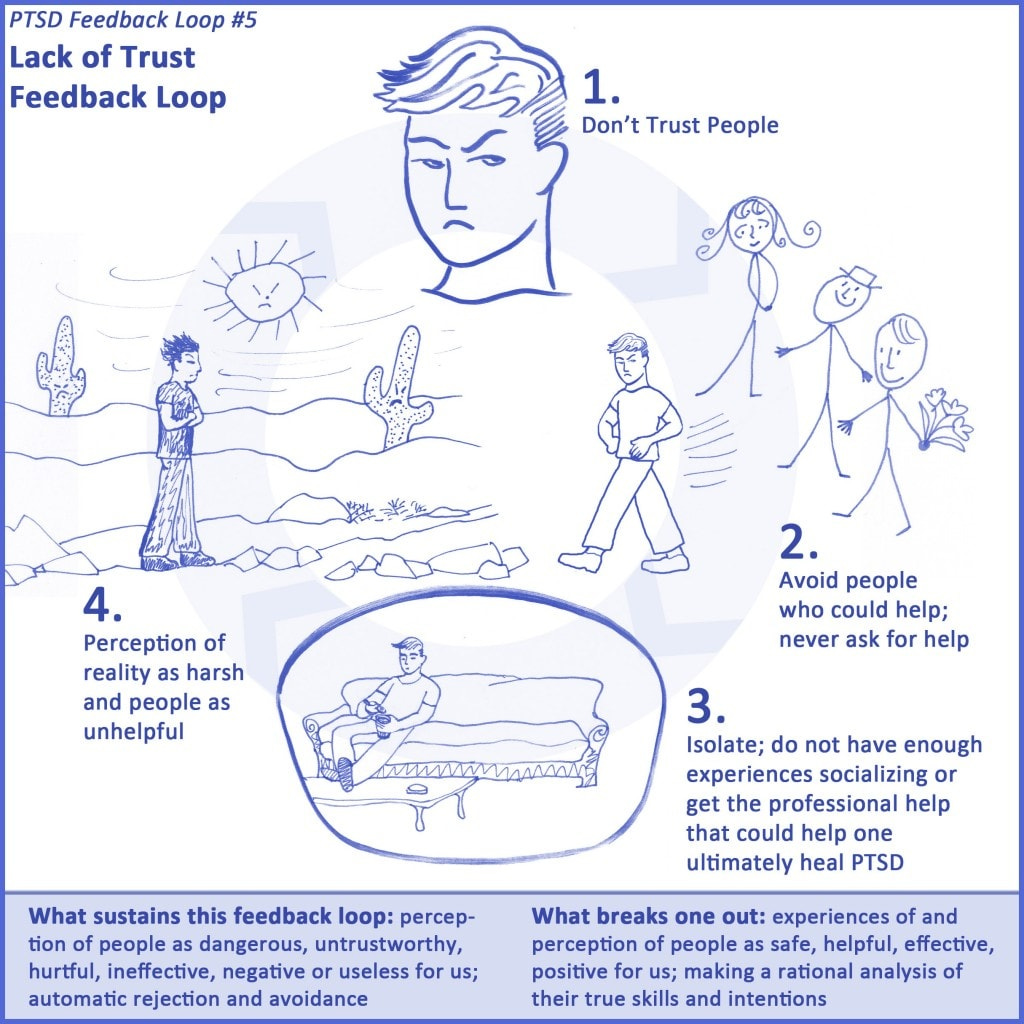
So myself, and probably most people, are in a Reality-Feedback loop. We feel and perceive good/bad, which causes us to believe in good/bad, which causes reality to output good/bad experiences, which causes us to feel good/bad.
In general, I think this feedback loop is in play most of the time, which causes a process of reality-normalisation, whereby a particular reality-experience-logic becomes so ingrained and habitual that it becomes normalised.
Eg, I was so used to my anxiety that I didn’t even realise that you could operate without it, and that many other people were in fact operating without it. Or that I was so comfortable public speaking, with only the vague awareness that some people struggled with it, that I didn’t realise that lot of people actually struggle with it to varying degrees. For instance, most people might be able to speak ‘publicly’ in an informal, relaxed, casual setting, but a lot more struggle in formal, ‘serious’, stressful settings. But I was comfortable doing so, to an audience of hundreds of strangers since I could remember. I just took it for granted and didn’t feel particularly fortunate or blessed to be able to do so.
I do think there are instances where this feedback loop can receive sudden shocks. An unexpected shocking misfortune or a miraculous good fortune of events. Or a sudden transformational experience somehow drastically changing one’s reality-logic. This is likely due to levels of play or reality-logic ‘above’ the feedback loop being introduced. Like a player who decides to go to the Game Settings or Game Editor to introduce or change something radically different. For instance, when we chose to enter our current reality-experience through ‘birth’, we probably chose the type of game and the settings to experience and simulate.
If you’re confident and relaxed, you can make the shot. If you know you can make the shot, you’re confident and relaxed. If you’re tense and self-doubt, you can’t make the shot. If you can’t make the shot, you’re tense and self-doubt.
So what I’ve found is that the tension-charge model seems to provide a great catalyst to breaking the reality-feedback loop in my current reality-experience.
In the loop of feel/ perceive good bad → believe good/bad → experience good/bad, releasing body tension makes one feel/ perceive more relaxation, ease, goodness. Previously, I was trying to break the good/bad belief, but it just wasn’t very effective by itself. Its hard to believe that things will go smoothly and easily when you feel tense and tight.
So one of the earliest improvements I noticed was that as the neck tension reduced, work-anxiety reduced, and I found myself being much more at ease just not worrying about it. So funnily, even before I discovered the tension-charge model, some turn of events had made it that we no longer needed to seek annual renewal of license, so that entire strain of tension was already past. But I still felt an anxiety to check my email every few days, just in case of whatever.
But as the anxiety reduced, I found that I could simply and comfortably adopt the attitude of ‘i’ll check my email when I feel like it, if something important requires my attention, there will be a way to contact me directly’. So nowadays I check my email maybe once a week, perhaps even more infrequently.
Same with many future thought-anxieties. Like ‘what happens when in 10 years, if I need this, if that happens, etc’. The thought-anxiety is just gone, so the thought no longer occurs. Like if you were never interested in golf or hockey, thoughts related to golf/ hockey just doesn’t occur to you, there’s no tension-charge related that ‘pushes’ your buttons.
As you start feeling more comfortable and at ease, you stop thinking about how to be more comfortable and at ease, which are thoughts that very often are the very cause of the unease and perpetuate the negative reality-feedback loop. So you start entering a more and more positive reality-feedback loop where you feel better and more at ease, it becomes easier to just trust, assume, believe and expect that things will work out good, and then reality then makes that experience.
Which is why the quotes of
“Be the change you want to see in the world” and “Start with yourself” and “Lead by example”
Feel so profound and stirring, but perhaps also seemingly difficult.
When the reality-feedback loop is making you feel tense and stressed, and giving you experiences of tension and stress, it requires great effort and determination to insist and persist with your change of belief.
And the thing with reality-normalisation is that you often don’t even conceive of or believe that you can believe in something better. You might believe in a general goodness or benevolence, but in specific and difficult issues, you still find yourself believing in tension and difficulty. Like a person who may be very relaxed and assured with money and career, but just finds relationships very difficult and thinks that its supposed and normal to be difficult because difficult is his normal.
One way my anxiety manifested was this general block and numbness towards other people, especially those who I was unfamiliar with. Some people are just at ease and can put others at ease immediately, but for most people, there is usually a gradual settling period, whilst for some they might just feel so tense and uncomfortable that their default hostility means only the most relaxed and coolest of cats can connect with them.
I was somewhere in the middle, perhaps leaning towards uncomfortable, or maybe I just more easily noticed those who were at ease. And I thought this was a personality/ temperament difference since I was always this way as far as I could remember. There wasn’t a period where I was very confident and became less so over time, though I think I did become gradually more confident which made me a bit more at ease. But this was more of ease through self-confidence rather than ease because I saw people as more friendly and good.
This is probably the pattern that played out throughout most of my life - I perceived the ‘world’ as tedious and difficult. And I think you can get a sense of that throughout my writing - that I perceived the world as stressful whilst being relaxed about my inner self. I found school and homework to mostly be a tolerable chore, and projected this onto the future ‘work’ environment. Military service was definitely felt as a forced obligation. And later, when helping my father with his business, ‘work’ was again an involuntary chore.
For others, they might see the world as warm and nurturing, but feel themselves as weak or self-destructive. And the highly traumatised people might feel they are both weak and cursed in a hostile and painful world. Whilst the ‘lucky’ ones feel both self confident and capable in a supportive and helpful world.
Joaquin Phoenix portrays the traumatised individual who feels powerless in a hostile world.
His interviewer is someone who experiences the world more positively, but still, or perhaps as a result, cannot empathize with the joker. They both share the same reality, but have very different reality-experiences. The interviewer himself has too much tension and defensiveness, and too little shared experience, to recognise the pain and experience of the joker. Certainly, the interviewer is full of self-confidence that has enabled him to be a successful media personality. But in terms of seeing the world as difficult, hostile, and problematic, both these individuals do see each other as mutual enemies and threats, making conflict inevitable.
And in a certain way, the joker does have sufficient self-confidence to play up a role and agree to a public interview. A truly no self-confidence person would not share a setting/ reality-experience with a very self-confident one.
When one perceives a stressor/ threat, the body hardens and tenses up. And when the body has a high tension-charge, any interaction with a potential threat activates the tension-charge. The body and mind becomes hard and tense, forming a separation and barrier between the self and the world/ other people. The sense of connection and oneness is blocked. At most, a person can be courteous and polite, but not quite warm or sincere because the body doesn’t recognise it to be safe to be so. Which is why when interacting with service staff or politicians, there is a very big and noticeable difference between obligatory politeness and sincere warmth.
So even when one wants to try to ‘open up’, to trust, to be more sociable, it is just very difficult when the body tension-charge is so high. And I found that by discharging tension, I just felt more relaxed when interacting with others. I could more easily sense their vulnerability, their human-ness, their innocence and wholeness and desire for respect and kindness. I wanted to do that in the past, but I just couldn’t do it by mentally ‘trying’ to be open.
As I practice more and more body-awareness and tension-charge, it became very clear that so much of my anxieties, frustrations, and the associated thought-patterns arose from that tension in the neck. I could feel the muscles tensing, hardening, activating. Before, there was this dissociated numbness so that I felt tense and in pain, but couldn’t quite pinpoint where this pain was coming from.
There are people who are charismatic and sociable due to their own self-confidence and personal magnetism. Their ease with themselves gives them a vibrancy and spontaneity and authenticity that is captivating and charismatic. At times, I find myself possessing such a charisma, but often my body tensions would inhibit me from expressing it.
And there are those who are so because they are so at ease and relaxed with others that they can very strongly sense the ‘One-ness’ with all, and thus, more easily feel a sense of love and warmth. They are sincerely interested and invested in other people’s welfare and inner selves because they don’t feel the separation of body tension. So rather than seeing and treating others as objects, they experience them as subjective-selves. Parents naturally have this relationship with their children, though in rare cases, there are parents with enough tension-trauma to feel little connection with their own.
In some way, I feel like i’ve gained a new ‘power’, being able to be sincere and authentic, not just to myself, but to others. To see the world and others as just social institutions and other people looking for their own happiness, respect and safety. For some, this might be a completely taken-for-granted normal. For others, it could be incomprehensible, something only possible with a few of their close friends/ family.
When you can only perceive people as ‘objects’ to be measured, assessed, and related to by how they serve your ‘self’, your ability to emphathise, understand and connect is only on a very basic, superficial, material level. You see them as object-ive matter, and can only conceptualise their needs and wants and utility through ‘material’ value.
If the criminal boss was able to relate on a human level, he might have been able to extract some measure of mercy from his killer. But the criminal boss can only interpret experience through his objective, life-denying logic and his thus completely unable to relate or communicate with his killer.
And I think there is a huge difference between those who try to ‘simulate’ human connection and those genuinely capable of it. And a lot of self-help sales tactics try to simulate this genuine connection, I suspect with very little success, unless the person is already quite capable of genuine connection. For politicians, they may be able to convince those who want to be convinced, in the same way some sales people and confidence tricksters can persuade those who actually want to be persuaded, that a certain material outcome is desirable for them, but this is done not through genuine human connection, but appealing to their material senses.
And perhaps the best sales people are those who can do both - that can connect on a heart-to-heart level, but also understand the material impulses at work. But there is a self-containment mechanism involved. Those who can connect to the hearts of other people will feel a natural connection that makes it difficult for them to exploit them. So sales people with a heart-connection can only sell products that they genuinely believe to be at least worthwhile. Thus, doing business with family is a double-edged sword - people can usually connect to, and thus, trust, their family in their business dealings, but once this trust is broken, so is the heart-connection.
This also explains why sages and saints are impossible to ‘cheat’. You can lie and mislead them, especially as part of an innocuous prank, but the type of exploitation and ‘cheating’ used to exploit and obtain material values simply don’t work on people who don’t care for them. You cannot convince a sage to invest money that he doesn’t care to grow, or convince him to do charity when he understands that the world metes out its own justice and harvest.
But even so, being able to connect and understand people on a deep and personal level is incredibly powerful in many ways that I am just beginning to grasp. For one, your social charisma and communication skills will become way better.
(As for people whose tension-charge is more towards their own inner self rather than the world, they probably feel like a super-powered version of themselves as they regain their self-confidence and sense of strength.)
A recent example that happened in the last two days inspired me to write about this.
So my football group was playing football at a primary school field, and since it was a primary school, the fences were not built very high, and a couple of balls flew over into the rest of the locked school compound. Initially, we wanted to self-retrieve it by climbing over a short fence, but when one of the guys wanted to do so, a caretaker refused to allow us, stating that it would be considered trespassing and he would call the police.
So the guy came back and shared with us what was what, and that the only way to retrieve it would be for someone to collect it tomorrow when the school opened.
So there was some disgruntlement with the situation. It seemed like the caretaker was being inflexible since we could simply climb and retrieve the ball and return in just one or two minutes. Instead, one of us had to take the time to collect the ball the next day. And then we weren’t sure if the right ball would be collected, etc. since initially we worried about if the primary school students would take the ball when they saw it, and all sorts of speculative worries. Basically, there was just this anxiety and lack of trust that all would turn out well, especially because one of the balls was a particularly expensive 100 dollar one.
Since I was lived the closest to the school, I agreed to collect the ball tomorrow. At the end of the game, I went up to the caretaker to ask if I could self-retrieve, and if not, the details on how to collect it. But before that, I tried to change my perception about the situation. I tried to see and perceive the caretaker as just another human doing his job despite his perceived inflexibility.
So I went up to ask him if we could self-retrieve the ball as innocently as I could, without any preconceptions or bias as to how he was. And then I could see that something in him softened seeing my own 'soft’ attitude, and he shared that he had already taken a photo of the ball and reported it to the school. So I immediately figured out that because he already took a photo of the ball and reported it on whatsapp, there was an administrative record as to what had happened, and it would be complicated to explain where the apparently reported ball was if we had self-retrieved it, since officially we were not allowed to climb over the fence to do so. If the photo had not been taken and the report not yet made and recorded, perhaps it would be much easier for him to allow us to self-retrieve the ball
So the initial preconception was cleared up - its not that the caretaker was unwilling to help us - he just didn’t want to get into trouble. Once I grasped this, I understood why he couldn’t let us self-retrieve it, so I proceeded to ask him about the details for collecting the ball. Quickly, I built a rapport with him as I understood he was not being deliberately difficult. I also asked him to take a photo of a second ball we had lost, though the second ball was kicked far in and hidden behind a wall and not easily spotted.
So the next day, I went back to the school to collect the balls. There were only two balls collected from the previous day and we had kicked over two balls, and both were white-ish as I remembered. So when the staff passed me the two balls, I figured out that both should be ours since they were both white and the only two balls they had collected. I remembered they were white-ish, but not the exact details.
When I got home, I took a photo of the balls and turns out one of them, the expensive 100 dollar one, was not ours. The brand was the same and the condition was also decent, but instead of being green and white, it was red and white. So at this point I felt a bit frazzled. Was our ball really green and white and not red and white? Could we just not accept this ball that was the same brand, in decent condition, and probably of similar value? Since they only collected two balls, if I went to ask for ‘our’ ball, would they not simply take back the ‘red and white’ ball that was not ours with no guarantee that our ‘green and white’ ball would be returned? Especially since they only found two balls. And was ‘our’ ball really ‘green and white’ and not ‘red and white’? If so, what could have happened? Did they deliberately or accidentally mix it up? Or did they simply not found our ball, and that it was still somewhere in the premises?


This is the sort of ‘anxiety’-thoughts and ruminations that would flit through my mind frequently in previous years, and which I had become normalised to. Something would ‘go wrong’ and my mind would race to try to figure out all the permutations of scenarios, possibilities, outcomes, solutions and resolutions.
Different types of tension-charge logic would have different interpretations of the situation. A fearful charge might fixate on the possibility of ‘losing the ball’ without getting one in return. A suspicious person might suspect that the ‘red and white’ ball was ours all along, or believe that someone had deliberately exchanged a ‘worse’ ball for the better, more expensive one. An angry, defensive personality might become frustrated at the situation and those involved. I could see these various tensions and thoughts flit through my consciousness. After confirming that the red and white ball was probably not ours, I decided to just trust and let the situation unfold accordingly.
So I went back and explained the situation to the staff. And quickly, they asked for me to return the red and white ball back. Which I felt an immediate reluctance to, because the expensive ‘lost’ ball was not mine to begin with, but I had been entrusted to ‘get it back’. At least with the ‘red and white ball’, it was ‘something’. But I sort of recognised the inevitability and reasonability of the request and situation. After all, the ball wasn’t ours, and it would make far more sense to return the not-ours ball back first for whoever the ball belonged to do collect if and when they did decide to do so. But I felt a bit of panic and flurry as to what to do next. The staff confirmed only two balls had been collected, and one of them was not ours, which I had given back.
I moved on the next ‘possibility’ - perhaps the ball was somewhere in the premises, but had not yet been found. So I made a bold request to enter the premises to search for it (school holidays so most of the compound was locked) which was denied the second the request left my mouth. The only thing ‘left’ was to hope that somehow they would find the ball and then contact me with it. But I didn’t have much of a hope - the caretaker already took photos of the two balls and they already said only two balls had been found yesterday.
So another of the staff suggested I point out where the lost ball had been kicked to so that they could search more specifically for it. So we left the staff office towards the school field. But as we reached the school field, the staff member noticed the ‘ops manager’ near where the ball had been kicked. She tried to call out to him, but he was too far away, and she didn’t bring her phone out, so we went back to the office.
And lo and behold, when we returned to the office, the ops manager had found the ball. Soon after, he made his way to the office and passed the ball to me. He explained that the ball had been kicked far in, into the sandpit, where they normally did not search for. Everyone had acted in good faith, and reality simply conspired to create this unusual set of circumstances to highlight and illustrate how powerful and transformative reality-logic could be.
For this to have happened, we would have to kick our green and white ball so far in that it landed somewhere the school did not usually check, and the caretaker had not also been able to see. Another ball had to be nearby, ‘near enough’ and in an approximate location to where it could be confused for our ball when the photo was taken. It so happened that when I went to speak to the caretaker at the end, the guy who had kicked the ball over and the guy whose ball had been kicked over had already left and weren’t around to confirm the details. We/ I assumed that the photo the caretaker took must be our ball since we were the first group that morning, and I had pointed him out to the approximate location of where I thought the ball had been kicked to. And it just so happened that ‘not-our’ ball was the same brand, just a different color.
I think the whole episode was just a script-written conspiracy to show and illustrate how our reality-experience is determined by our reality-logic. I could forsee that if there was someone ‘rebellious’ enough to insist on climbing over the gate to self-retrieve (discussions of this did float up…), things could have turned out to be a lot more troublesome. Its not that the situation was ‘flawless’ - there could have been more flexibility, the fences could have been built higher, the search could have been more thorough, etc, but in essence, everyone was acting in good faith. But if I had operated with a higher tension-charge and a more tense and hostile logic, the situation might have equally turned more sour and difficult.
What I found early in my spiritual practice was this reality-feedback loop that ideas like ‘the law of attraction’, ‘you reap what you sow’, ‘karma’, dependent-origination, ask and it will be given, seek and you shall find, knock and the door will be opened, ‘for as he thinketh in his heart, so is he’ all allude to, is very real and can be verified. It is easy to verify once you see it happen, once you have the clear experience and memory of operating through two different reality-logic and seeing their different effects, but it’s difficult to deliberately try to verify it.
Because if you try to verify it by thinking ‘okay i’m going to assume everything is good’, the intention behind that thought is not truly the assumption that everything is good, but the attempt to ‘verify’ it. And if you try to gain wealth by trying to adopt the mindset of ‘wealth-consciousness’, the underlying nature of the attempt is one of scarcity-trying-to-be-wealthy.
The person who assumes and knows everything is good is not trying to ‘verify it’, the person who has a consciousness of wealth and abundance is not trying to ‘gain it’. That is why there is this difficulty of trying to ‘break’ out of one’s reality-feedback loop into a more positive one once the feedback loop is very normalised.
But just because its difficult doesn’t mean it shouldn’t be attempted. The attempt of trying to break free is already more positive than being resigned to ‘being stuck’ in a lower reality-loop. In my own early attempts to break free through self-help and new age ideas, my attempts to do so did create a reality-feedback that showed that it was malleable and fluid. In doing so, I gradually gained more and more belief and confidence in the concept of the reality-feedback loop itself, and recognizing its existence, became more and more adept and willing to adopt better, more positive reality-logic.
And as I released the tension-charge from my body, my reality-feelings became more at ease and relaxed, which also makes it easier to be aligned with the reality-logic of trust and goodness. In turn feeding back to reality-experience→ reality-feeling → reality-logic.
So I think this tension-charge model is also the key to breaking free of our current reality-feedback loop, into one that is more relaxing and at ease. Discharge your tensions, feel more at ease, and you will keep entering more and more easy and relaxed realities.
This piece really made me think about how intricte our bodies are. It's so clever how you connected your personal experience with the AI explanation of fascia; does the body need to 'relearn' its healthy state after a release?